

Laporkan konten ini jika melanggar ketentuan, mengandung materi sensitif, atau hak cipta.
What Foods Can Help You Stay Healthy As You Age?
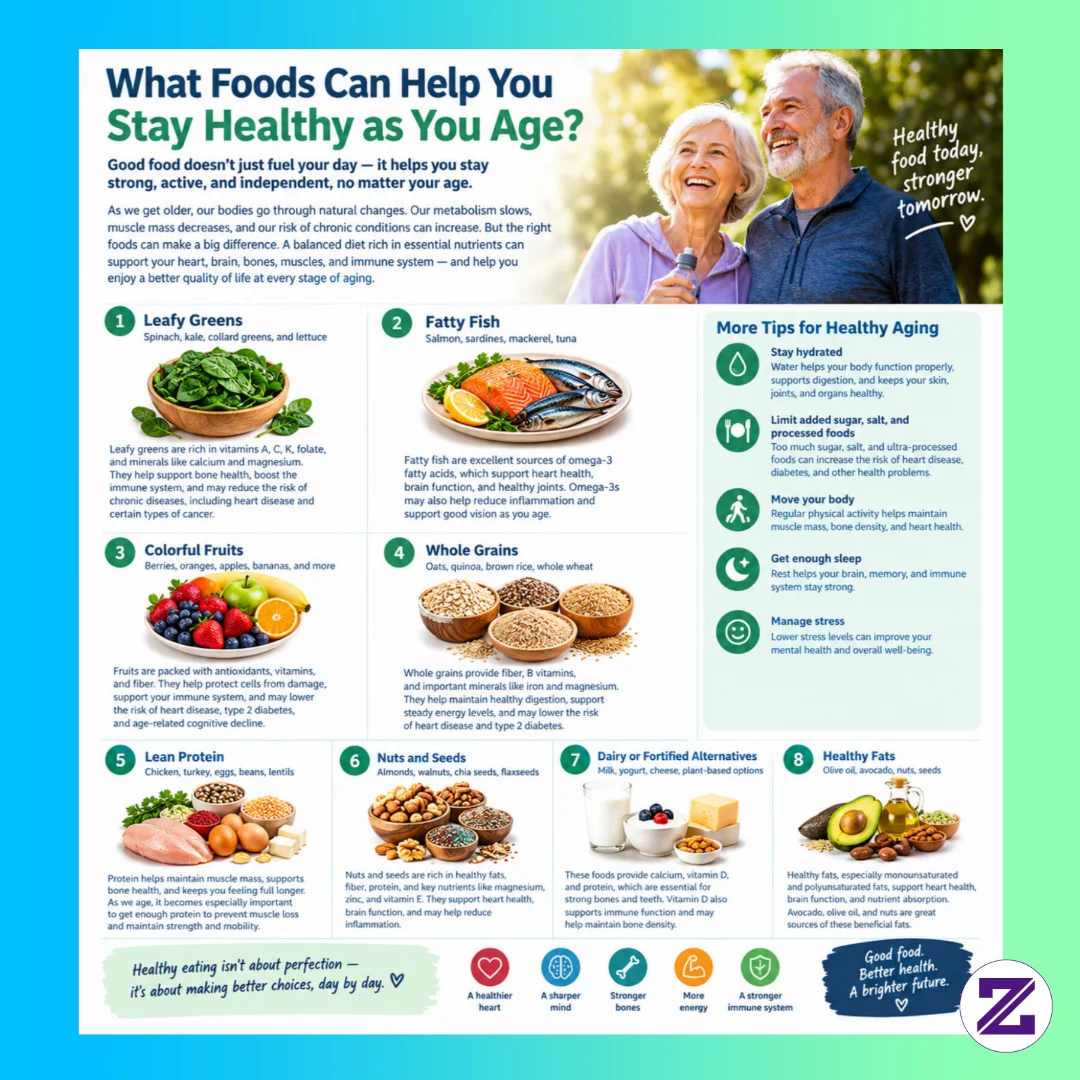
Have you ever wondered which foods can help you stay healthy, strong, and energetic as you grow older? Aging is a natural part of life, but the foods you eat every day can make a meaningful difference in your overall health. As we age, our bodies experience natural changes. Muscle mass may decrease, bones can become weaker, and the risk of certain health conditions may increase. The good news is that eating a balanced diet can help support your heart, brain, bones, and muscles. You do not need expensive supplements or complicated diets to get started. Many nutritious foods are available at your local grocery store or market. Let's discover eight foods that can help you support healthy aging and maintain a better quality of life. 1. Leafy Green Vegetables Leafy green vegetables, such as spinach, kale, and broccoli, are excellent choices for healthy aging. They provide important nutrients, including vitamins, minerals, and fiber. Some leafy greens contain vitamin K, which plays a role in bone metabolism, while other nutrients support normal body functions. Fiber also helps maintain healthy digestion and can help prevent constipation. Try adding spinach to your breakfast, eating broccoli with lunch, or including green vegetables in your dinner. Remember, eating a variety of vegetables is more beneficial than relying on just one type. 2. Fatty Fish for Heart and Brain Health Fish such as salmon, sardines, mackerel, and trout provide omega-3 fatty acids and high-quality protein. Omega-3 fatty acids support normal heart function and may help improve triglyceride levels. Protein is also important for maintaining muscle mass, especially as you get older. You do not need to buy expensive fish to eat healthily. Choose affordable options available in your area and prepare them by steaming, baking, or grilling. Try including fish in your meals regularly as part of a balanced eating pattern. 3. Colorful Fruits Berries, oranges, apples, bananas, and papayas are nutritious additions to your daily diet. Different fruits provide different vitamins, minerals, fiber, and beneficial plant compounds. For example, oranges provide vitamin C, while berries contain fiber and polyphenols. These nutrients help support normal immune function and overall health. Whole fruits are generally a better everyday choice than fruit juice because they retain their fiber and can help you feel satisfied. If you have diabetes, you can often still enjoy fruit. Pay attention to portion sizes and follow your healthcare professional's recommendations. Try eating a variety of colorful fruits throughout the week instead of choosing the same fruit every day. 4. Whole Grains for Energy and Digestion Whole grains such as oats, brown rice, quinoa, and whole-wheat bread provide fiber and important nutrients. Fiber supports digestion and may help lower LDL cholesterol. Certain types of fiber can also help support healthier blood sugar levels. Whole grains provide carbohydrates that your body uses for energy, helping you stay active throughout the day. You can start with simple changes, such as eating oatmeal for breakfast or replacing some white rice with brown rice. Small changes can gradually help you develop healthier eating habits without making your meals complicated. 5. Protein-Rich Foods to Maintain Muscle As we age, maintaining muscle strength becomes increasingly important. Foods rich in protein can help your body maintain and repair muscle tissue. Good protein sources include eggs, fish, chicken, tofu, tempeh, beans, lentils, milk, and yogurt. Try including protein in each main meal. You could eat eggs for breakfast, tofu or tempeh for lunch, and fish or beans for dinner. Combining a balanced diet with appropriate strength exercises can help support muscle function, mobility, and independence. Protein requirements differ from person to person. If you have chronic kidney disease, consult your healthcare professional before increasing your protein intake. 6. Nuts and Seeds Almonds, walnuts, peanuts, chia seeds, and flaxseeds provide healthy fats, fiber, protein, and various minerals. Unsalted nuts can be a nutritious snack and may support heart health when they replace less healthy snack choices. You can sprinkle seeds over oatmeal, add nuts to yogurt, or enjoy a small handful between meals. Because nuts and seeds are energy-dense, moderate portions are usually a sensible choice. If you have a nut allergy or difficulty chewing, choose suitable alternatives. 7. Calcium-Rich Foods for Strong Bones Healthy bones are essential for maintaining mobility and independence as you grow older. Milk, yogurt, cheese, calcium-set tofu, and calcium-fortified plant-based drinks can help provide calcium. Vitamin D is also important because it helps your body absorb calcium. Some foods provide vitamin D, including certain types of fish and fortified products. In addition to good nutrition, regular weight-bearing activity and strength exercises can help support bone health. If you have osteoporosis or another bone condition, seek professional advice because food alone may not provide all the treatment you need. 8. Healthy Fats Avocados, olive oil, nuts, and seeds contain unsaturated fats that can form part of a heart-healthy diet. These fats help your body absorb certain vitamins and support normal cell function. Replacing some foods high in saturated fat with foods containing unsaturated fats may benefit cardiovascular health. You can add avocado to a sandwich, use a small amount of olive oil in cooking, or include nuts in a balanced meal. Remember that portion sizes still matter. The goal is to enjoy a variety of nutritious foods rather than relying on a single ingredient. Other Habits for Healthy Aging Eating well is only one part of healthy aging. Drink enough water throughout the day unless your healthcare professional has advised you to restrict fluids. Staying hydrated supports normal body functions. Stay physically active by walking, performing suitable strength exercises, or choosing activities you enjoy. Get enough sleep, manage stress, and limit excessive added sugar, salt, and highly processed foods. If you experience unexplained weight loss, a persistent loss of appetite, or difficulty eating, speak with a healthcare professional. Your nutritional needs may change with age, medications, and medical conditions, so personalized advice can be especially helpful. Final Thoughts So, what foods can help you stay healthy as you age? Leafy greens, fatty fish, colorful fruits, whole grains, protein-rich foods, nuts, calcium-rich foods, and healthy fats can all contribute to a balanced diet. No single food can stop aging or guarantee that you will never develop a disease. The key is to build healthy habits that you can maintain over time. Start small. Add more vegetables to your meals, choose whole fruits, include protein in your diet, and stay active every day. Remember, healthy aging is not about being perfect. It is about making better choices consistently and giving your body the nutrients and care it needs. Now, here is a question for you: Which of these eight healthy foods do you eat most often? Share your answer in the comments, share this video with someone who wants to age healthily, and follow for more practical health tips! Because a healthier future can begin with the food choices you make today.
Advertisement
